Education for refugees more than books


The Kick Project fully endorses the views of Melissa Fleming from UNHCR on empowering refugees within the camps and settlements to thrive, as per the above TED Talk, (or here if the embed isn't working) given in Rio last October.

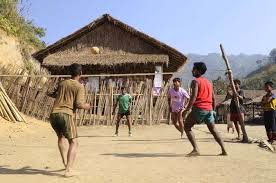
She speaks mainly of academic education, the kind that leads to degrees and diplomas. Its a totally valid view but I would enhance what she says with a thought for the value of physical education through organised and secure sport.

Maths and English may not be for everyone. If fact, if that is the only subjects of education then this may even alienate students. In cases of refugees, these people have been alienated enough.

Sport, for me, provides the following important outcomes:


  • Good Health
  • Confidence
  • Interaction
  • Co-operation and Team-work
  • Competing Fairly
  • Hope
  • Fun
  • Pride
  • Trust in Others
  • Direction and Focus
  • Healthy Distraction and Escape
  • Community Engagement


I'm sure there are more. That's just off the top of my head.

The message is that refugees deserve so much more than most are getting from us in the wealthy, access-rich world. Formal education is important, along with the basics like food and shelter.

But living is not life. And so much of life can be learnt through access to competitive sport.

Fleming makes the point that refugee camps should be places of Healing, Learning and Opportunity.

To me that involved sport as much as books.

Soccer is the world game, with rules everyone understands.

I think the conclusion is simple.


Comments

Popular posts from this blog

Post-UNOSDP - Is the IOC fool's gold?

This is a longer version of an article published on SportandDev.org With the United Nations Office on Sport for Development and Peace closed down by the global body, there is undoubtedly a void in this space in which many of us here work. But, for all the high profile oomph the UNOSDP added to the world of sport for good, it’s passing need not be seen as devastating. For one, the work the UNOSDP has already done in its 16 years of life has laid a platform for the development of sport for social justice. While many of us knew for years that sport had a wider purpose beyond mere business or entertainment, the UNOSDP has provided a base of credibility that may have otherwise taken much longer to establish. While much of the work is, in many ways, still to be done, the UNOSDP has left a positive legacy on which we can all build. More problematic is the shifting of the UNOSDP’s brief to the IOC. Obliging the IOC to administer to the peace and development facets ...

Statement on Funding for the Rohingya Football Club

We are very pleased to announce that The Kick Project has received a $AUD16,500 donation from the Australian Government to fund a pilot soccer program with Rohingya refugees in Malaysia. The funds, coming through the Australian High Commission in Malaysia, will allow the charity to support the Rohingya Football Club which has become a vital part of the exiled Rohingya community in Kuala Lumpur. The program entails kitting out the team, providing transport to games and establishing a sports and community hub where Rohingya people can access sporting equipment and coaching. Young people, and girls in particular, are the long term focus of the initiative. The Kick Project founder James Rose says the Rohingya are in dire need of assistance. "The UN has called the Rohingya arguably the most persecuted group in the world. They've been forced to flee their homelands in Myanmar, where they have been made stateless by government decree, and many have lost their lives...

How Sport For Development and Peace Works (Pt 1)

Pic: abc.net.au Some of us from The Kick Project team were in a meeting with potential partners recently, when we were asked a question about “Proof of Concept” of sport for development and peace. The context of the question was that we were talking about sport for development and peace - especially football - but we weren't putting the pieces together. As she said, “It's all good. But I don't see how this works. How does sport and football generate peace and development? What's the proof of concept ?” It made us think: it can be easy when you're working away on your stuff to lose touch of your context. In this case, this person was someone who wrote grant applications. She wanted to know how she would sell our concept to attract funding. Completely fair enough. So, we (hopefully) addressed her concerns at the time and took her concern on notice for next time we spoke. Debriefing afterwards, we realised there may be others out there who don't quite see t...